
“The Love To Move Programme has a demonstrable benefit in the physical, emotional and cognitive aspects of older people and those older people having mild to advanced forms of dementia appear to benefit the most.” – Research by Age UK, June 2016
For the full report from Age UK, go to this link.
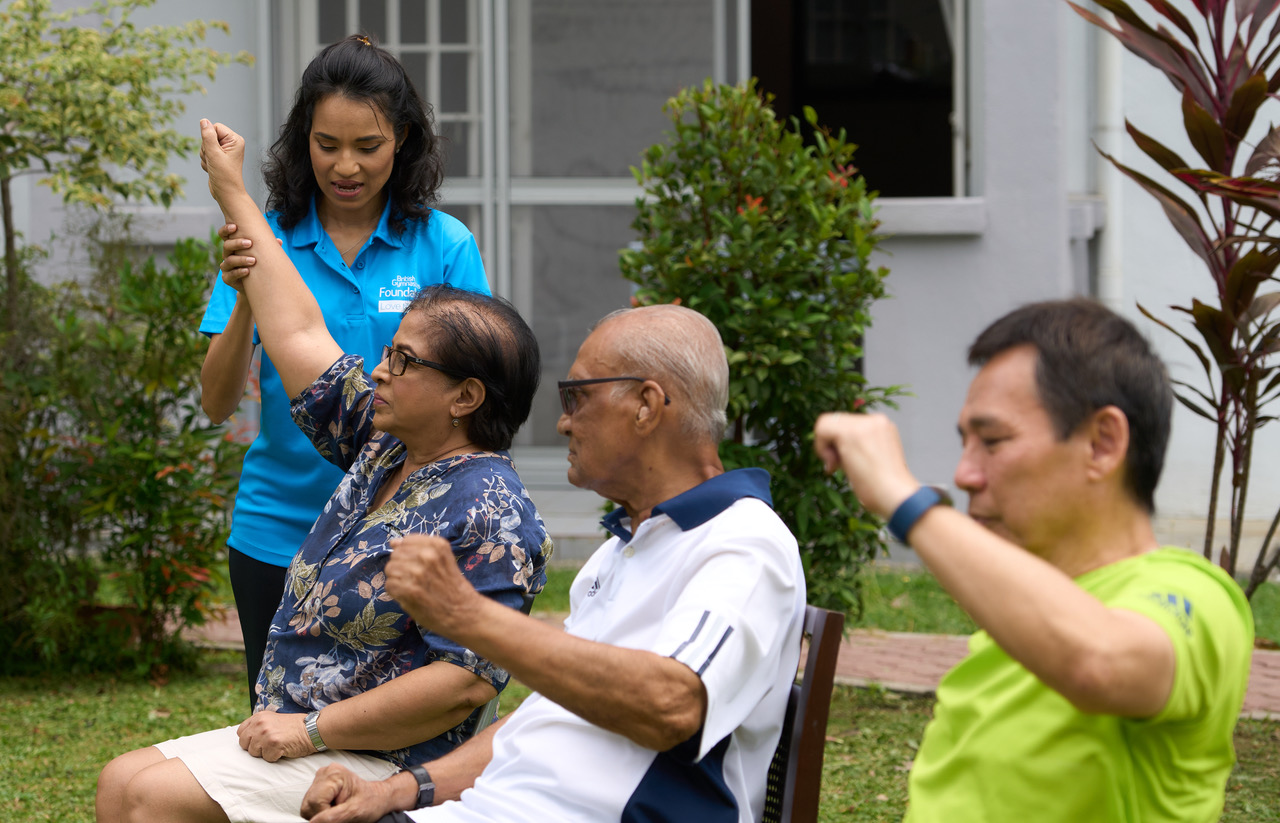
Love to Move is a gymnastics exercise programme developed by the British Gymnastics Foundation (BGF) for the elderly, in particular those with dementia. The programme is chair-based to ensure it is accessible to the majority of older people and is a cognitive enhancement programme designed to improve wellbeing in mind and body.
It is a fun programme designed to get older people moving and functioning better as it carefully integrates the use of foundation movement skills, cognitive stimulation and social interaction activities.
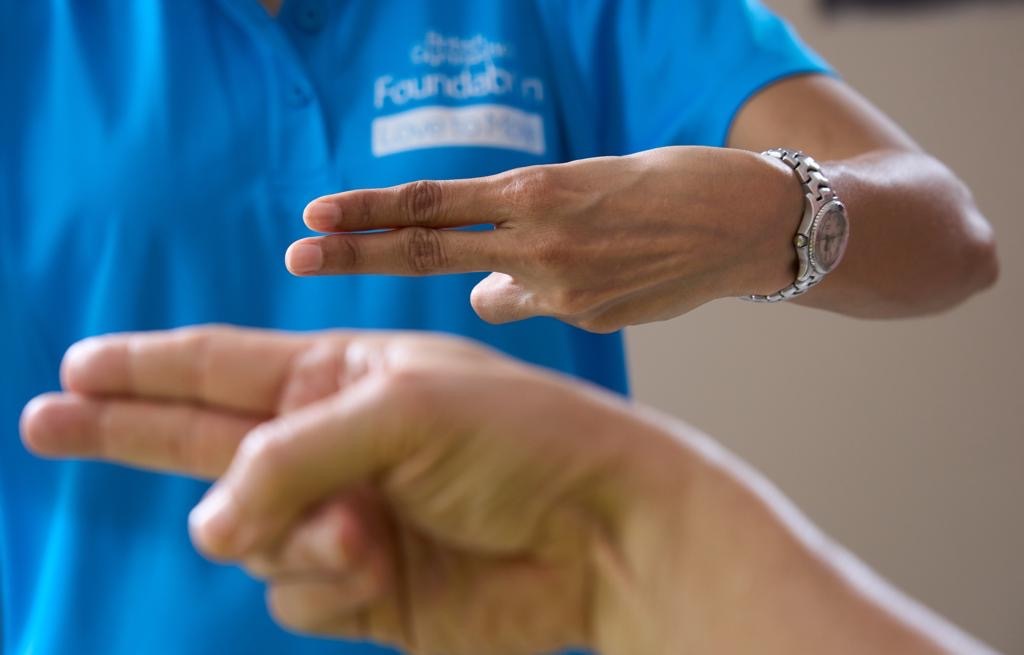
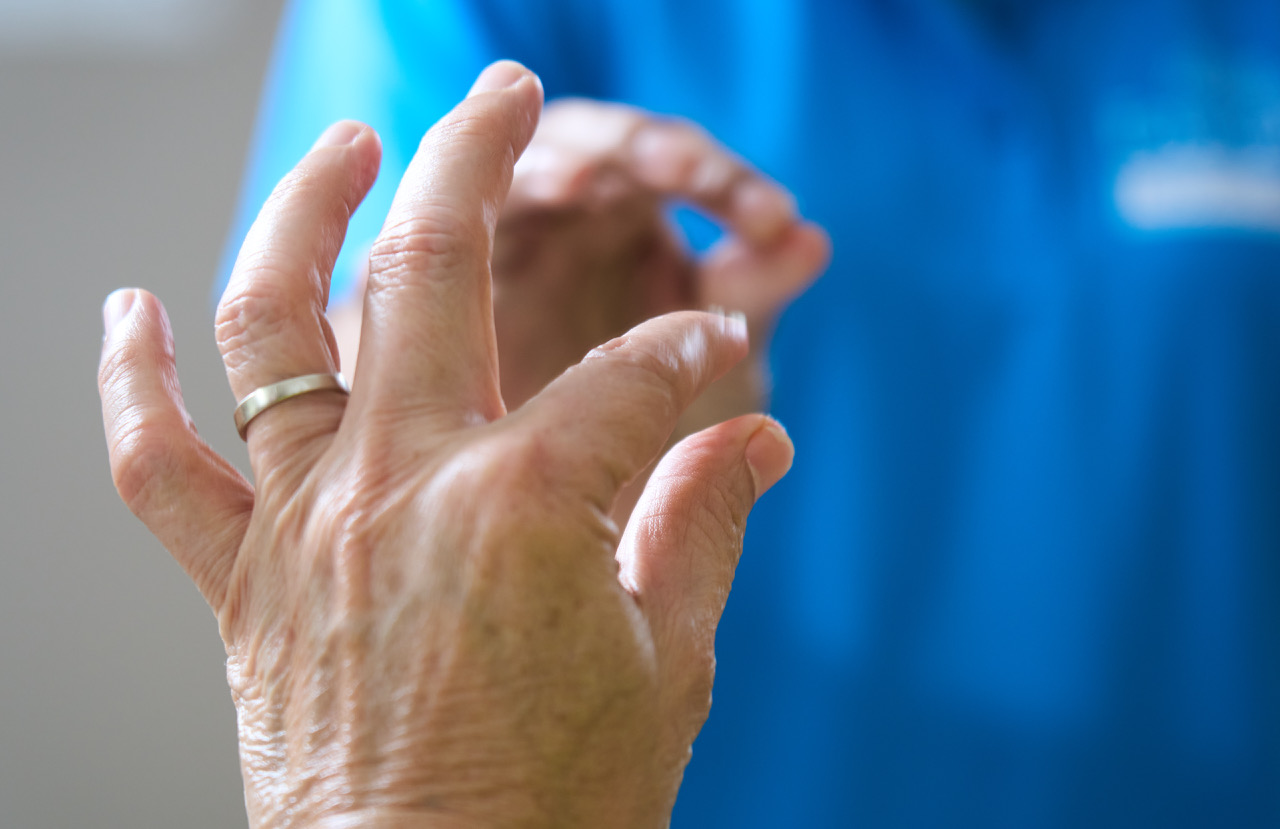
Part of Love to Move is based on bilaterally asymmetrical movement patterns. This is understood to benefit older people and those with dementia and mild cognitive impairment, by enabling the left side and right side of the brain to process information independently, thus improving cognitive function, coordination and the ability to carry out activities of daily living more independently.
Above all, the programme is fun and a great way to connect with your loved elder!
Love To Move was designed by the British Gymnastics Foundation who worked closely with gymnastics experts and Sport & Exercise professors from Japan who had previously developed and delivered a cognitive enhancement gymnastics program on behalf of the Japanese Government.
The Japanese programme, led and designed by Professor Araki Tatsuo of the Nippon Sport Science University in Tokyo, was commissioned to improve the conditions of life for people who are living with dementia. It was so successful that it is now completely state funded and every care home in Japan currently benefits from this activity.
Working with Professor Araki Tatsuo, the British Gymnastics Foundation adapted the program and further developed it to include many more activities and strategies which are proven to be effective for the increased well-being of people living with dementia and other neurological conditions. In the UK, the programme receives significant government funding to support the development of Love To Move across the country.
Love To Move’s unique selling point is that the activities undertaken are designed specifically to increase cognitive reserve (cognitive reserve is the idea that people develop a reserve of thinking abilities during their lives and that this protects them against losses that can occur through ageing and disease, in other words, your brain’s ability to improvise and find different ways of completing a task).
The programme contains movement patterns that improve bilateral coordination. These are movements that require both (bi) sides of the body (lateral) to coordinate together in order to complete a task. These are several categories of bilateral coordination and continuing to integrate these categories in the Love To Move programme can support cognitive function for everyone, not only those who are already living with dementia.
Love To Move is not a regular exercise class. Each element of the programme has a purpose and is carefully choreographed with music. Each exercise segment is selected to work on different parts of the body, and most importantly, on different parts of the brain. Research carried out by Age UK found that improvements were noted in individuals when the session was repeated on a once-a-week basis. Benefits could sometimes be seen after one or two sessions, however, most impact was found after participants had taken part for three to four months.
The programme has been tried out in several UK care homes, and research has found the following benefits for participants:
Before you decide if this programme is for you or your loved elder, you need to ensure the following:

Helping individuals, families and the elderly in our community to live rich, fulfilling, independent lives.